Posts

Showing posts with the label Polymers and Resins

Petroleum Resins Are Used As A Tackifier In The Rubber Industry, Due To Its Excellent Bonding And High Softening Point

Image
  Petroleum Resins Petroleum resin is a low polymer thermal plasticizing hydrocarbon resin that has a tackifying effect and finds its wide use in paints, rubber, printing inks, paper sizing agents, and plastic modifiers. It is obtained as byproducts from the cracking of petroleum liquids, gas oil, or naphthas. Petroleum resins are used as adhesives, coatings, and sealants. They are manufactured through catalytic or thermal polymerization of olefins such as butane and naphtha using Friedel-Crafts catalysts. These resins are highly reactive and exhibit a wide variety of chemical properties that vary from color to softening point to viscosity. They have good adhesion and can withstand high. The global  petroleum resins market was valued at US$ 3149.18 Mn in 2021 in terms of revenue, exhibiting a CAGR of 8.35 % during the forecast period (2022 to 2030). Petroleum resins is widely used in printing inks as a binder due to its good adhesion properties and high softening poin...
Increasing Demand from End-Users Is Augmenting the Growth of the Global Synthetic & Bio-Based Adipic Acid Market

Image
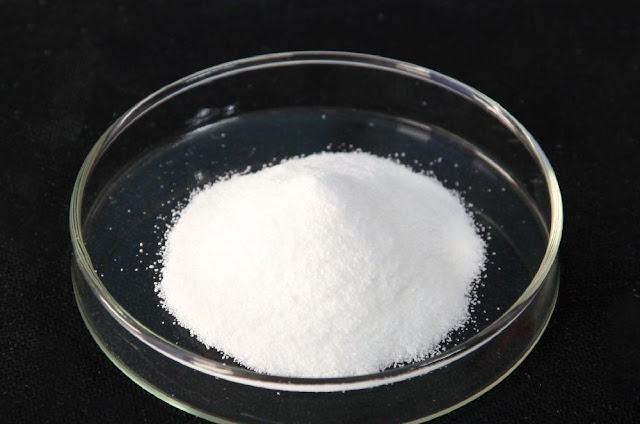
  Synthetic & Bio-Based Adipic Acid Market Synthetic & Bio-based Adipic Acid Market, By Application (Nylon 6,6 fiber, Nylon 6,6 resin, Polyurethanes, Adipate esters, Others), and By Region (North America, Europe, Asia Pacific, Latin America, MEA) - Size, Share, Outlook, and Opportunity Analysis, 2020 - 2027. Market Overview: Adipic acid is a white crystalline compound with the chemical formula C6H10O4. It is a dicarboxylic acid, meaning it contains two carboxyl groups (COOH) attached to a central carbon chain. Adipic acid is an important industrial chemical primarily used as a raw material in the production of nylon 6,6. Adipic acid is traditionally produced through the oxidation of cyclohexane or cyclohexanol using nitric acid. However, there is an increasing focus on the production of bio-based adipic acid derived from renewable feedstocks, such as plant-based sugars or fatty acids, as a more sustainable alternative to petroleum-based adipic acid. Competitive Landsc...

Dodecanedioic Acid Is A Major Raw Material For Producing Nylon Materials And Engineering Plastics, It Also Has Several Industrial Applications

Image
Dodecanedioic Acid Dodecanedioic acid is used in a wide range of applications. It is mainly found in antiseptics, painting materials, top-grade coatings, corrosion inhibitors, surfactants and engineering plastics. It is also used in manufacturing resins and pharmaceuticals. DDDA is produced through both synthetic and biotechnological processes. The synthetic process involves the oxidation of butadiene to form cyclododecatriene. This is followed by nitric acid oxidation to produce dodecanedioic acid. DDDA is obtained in its pure, white and flaky form. It is a saturated aliphatic dicarboxylic acid. It has a high molecular weight and is generally available in a form that is free of hydroxyl groups. DDDA is used in an increasing number of industrial and commercial applications across the world as a solvent and lubricant. The Global Dodecanedioic Acid Market is expected to surpass US$ 1,074.0 million by the end of 2030 in terms of revenue, exhibiting a CAGR of 7.7% during the forecast peri...

Unsaturated Polyester Resins Are Widely Being Used In Range Of Applications Such As Coating Materials, General Purpose Resins and More

Image
  Unsaturated Polyester Resins  Unsaturated Polyester Resins (UPR) are a family of linear polymers that contain double bonds in their backbone. They are prepared by the condensation reaction between dicarboxylic acids and polyhydric alcohols. These resins are widely used in various industries such as sheet molding compound, bulk molding compound, toners and laser printers. Unsaturated polyester resins can be produced from a variety of starting materials, such as phthalic anhydride, isophthalic acid, terephthalic acid and maleic anhydride. These starting materials can be dissolved in suitable reactive diluents such as styrene. These diluents are then heated and reacted with the unsaturated polyester resin to produce the desired final product. The use of unsaturated polyester resins is increasing in various end-use industries such as marine, electrical appliances and pipes & tanks. They have a high flexibility, lightweight properties, and resistance against corrosion. ...

Epoxy Curing Agents Are Increasing Being Developed In Newer Forms by Manufacturers All Over The World

Image
  Epoxy Curing Agents Epoxy Curing Agents are used to cure epoxy resins that are in various applications. There are a number of different types of epoxy curing agents in the market. They are classified based on their end uses and regions. Epoxy curing agents are also used in wind energy, which is anticipated to witness a high growth rate. Its development is predicted to provide many opportunities for manufacturers. According to a study by Coherent Market Insights , the global epoxy curing agents market was valued at US$ 1,316.9 million in 2016 and is expected to witness a CAGR of 4.9% , in terms of revenue, over the forecast period (2017 – 2025). Epoxy curing agents are found in coatings, adhesives, composites, and electrical and electronic insulation. These resins cross-link through secondary hydroxyl groups. Amidoamine systems are widely used for curing epoxies at room temperature. Another innovative approach is the use of a water-soluble curing agent on a Mannich base...

Caprolactam; is used to create nylon 6 fibers, filament and plastics

Image
  Caprolactam Caprolactam is a cyclical amide and an antecedent of nylon 6. It is utilized in the production of nylon 6 string, carpet, manufacturing plastics, automotive plastics, and other goods. The chemical is utilized in the manufacture of leather tanning proxies. Caprolactam is a hygroscopic element, indicating that it is mildly soluble in water at room heat. It is generally observed in white flakes and gemstones. Its vapor capacity at 25 degree C is 1.9X10⁻³ mm Hg. It means that caprolactam will not volatilize from the base of soil and water. The Global Caprolactam Market Size is estimated at US$ 11,453.48 million (revenue) and 5,747.09 kilo tons (volume) in 2016 and is expected to expand at a CAGR of 4.6% in terms of revenue and 2.7% in terms of volume from 2017 – 2025. Anyhow, it can be unconstrained from its formulation in objects. Caprolactam is a moderately toxic element. In vitro tests have exhibited that its molecule is capable to hurt living lymphocytes. Sim...

Polyacrylamide; Used in Mineral Processing, Wastewater treatment, Pulp and Paper, and Oil recovery

Image
  Polyacrylamide Polyacrylamide is a hygroscopic polymer that is used for a variety of applications. Its properties include a high molecular weight, excellent water solubility, linear chain structure, and a wide range of ionic groups. These properties make it a useful chemical in various fields, including wastewater treatment, paper manufacturing, and mining. It can be also used as a plasticizer for laminating. It is commonly used as a flocculant, a soil conditioner, and a viscosity modifier and friction reducer in enhanced oil recovery and high volume hydraulic fracturing. According to Coherent Market Insights the Polyacrylamide Market Global Industry Insights, Trends, Outlook, and Opportunity Analysis, 2022-2028. Polyacrylamide is also a popular component in cosmetics. It is often used in cosmetics to stabilize products and bind ingredients. It has foaming, anti-static, and lubricating properties. In cosmetics and personal care products, polyacrylamide is used in the formu...

Asphalt Additives; Increase the Strength and Frequency of Bonding between Asphalt and Aggregate

Image
  Asphalt Additives  Asphalt additives are substances added to the asphalt binder to alter the characteristics of the final blend of Hot Mix Asphalt (HMA). HMA is the combination of around 95% gravel, sand, or stone bound together with the help of asphalt cement; heated aggregate, mixed, and combined with the aggregate at an HMA facility. Various types of additives are used, which enhance the performance and durability of asphalt. These additives reduce the risk of potholes, cracking, and raveling. They also improve the flow and wettability of asphalt binder, which increases its resistance to moisture damage. They also lower the compaction temperature and increase its resilient modulus. According to Coherent Market Insights the Asphalt Additives Market Global Industry Insights, Trends, Outlook, and Opportunity Analysis, 2022-2028. Asphalt additives offer various advantages such as stripping resistance, reduced moisture damage, reduced thermal cracking, rutting resistance...

Automotive Labels; are Any Sticker on or Outside the Vehicle that Identifies Model or the Features

Image
  Automotive Labels  While in comparison it’s a tiny element, motorcycles and the automotive labels that generally play an implausibly crucial role in the automotive industry. From the security or the safety stickers to the VIN labels, the auto labels offer critical data or the information, safety notices and the warnings to car owner and the technician or the mechanics. Before one can totally grasp or identify the reasons behind the auto labels importance, one must initially understand the things that the automotive labels comprise of such as badging, any sticker on the top or the exterior parts of the automotive that indicates make, model or features and the labels. According to Coherent Market Insights the Automotive Labels Market Global Industry Insights, Trends, Outlook, and Opportunity Analysis, 2022-2028. They fulfil the purpose of displaying the component data, a company’s name brand or the logo, prices, the technical or the mechanical data and various other vita...